What’s the story behind your creative journey? Tell us how you got started, and what moment made you realize this was your calling?
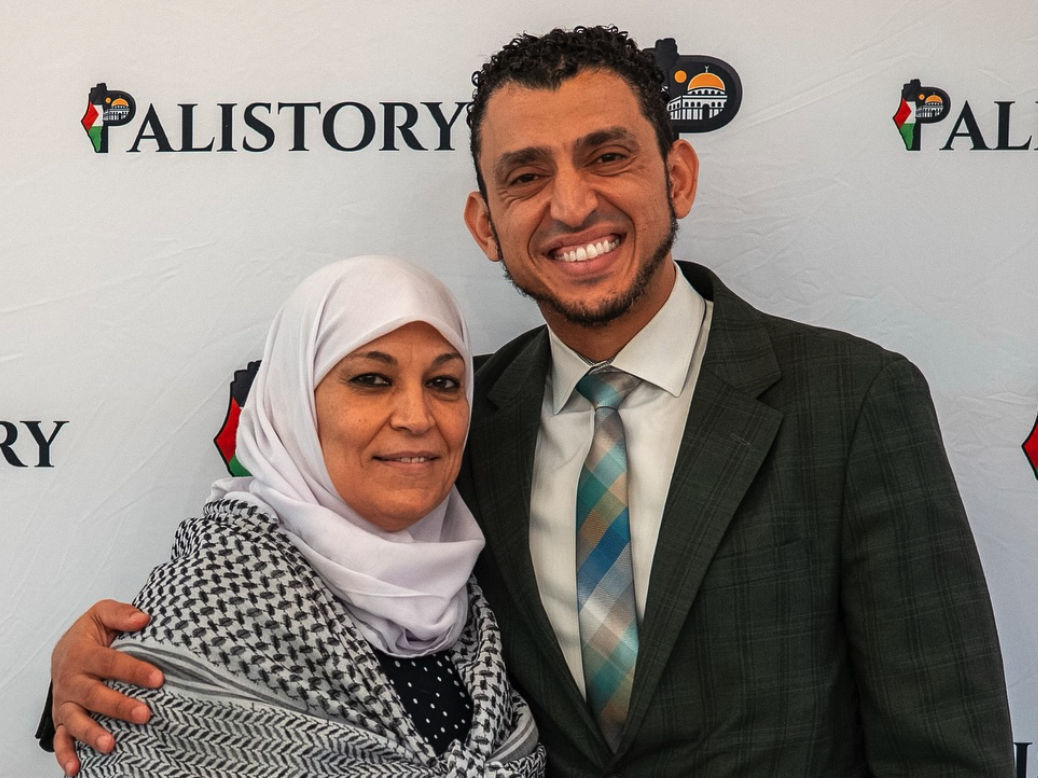
Palistory was ignited when I was thirteen years old, watching the footage of Muhammad al-Durrah assassinated in his father’s arms on television. I thought the world had finally seen it. Then I watched the story get twisted and propagandized until the boy was forgotten and the narrative belonged to everyone except us. Zora Neale Hurston warned us, if you are silent about your pain, they’ll kill you and say you enjoyed it. We cannot outsource our story. Years later, the courtroom gave me the tool. I learned that storytelling is the engine of justice, and the efficacy of a story is directly proportional to the time you spend with the person living it. If it works for a jury, it works for a people. So we sit with our Palistorians the way we sit with our clients. We listen long before we film. Silence is surrender. Palistory exists so that no Palestinian child is ever forgotten again.
How does your cultural or faith background influence your work? We’d love to hear about the unique perspective you bring to your art.
Islam teaches that the pen is sacred and that truth must be spoken even if it trembles on the tongue. My faith demands sabr jameel, beautiful patience, and my heritage demands memory. I am not creating from grievance. I am creating from inheritance. Palestine is not a cause I picked up. It is a covenant I was born into.
What’s a project you’re especially proud of, and what made it meaningful to you? Walk us through the creative process and why it holds a special place in your heart.
The Palistory episode with Dr. Hassan El Najjar. He was my sociology professor at Dalton State College and is a close friend of my father. He was born in Gaza, lived the Nakba, and bears it with a dignity that humbles me. To sit on the other side of the camera with the man who once stood at the front of my classroom is an honor I do not take lightly. We have not released the episode yet, and that is by choice. It is being fine-tuned and refined, because a story this sacred cannot be rushed.
If you could collaborate with any artist (living or historical) from the Muslim or ethnic diaspora, who would it be and why?
Malcolm X. Without question. He understood, before most of the world was willing to admit it, that the Palestinian cause and the cause of every oppressed people are stitched from the same cloth. To ask him how he sharpened his voice without losing his soul would be the conversation of a lifetime. Beyond him, Mahmoud Darwish, who turned exile into poetry, and Ghassan Kanafani, who held the pen and the cause with the same steady hand.
What’s one misconception about your art form or your community that you’d like to challenge? What do you wish more people understood?
That Palestinian storytelling is political. It is not. It is human. When a grandmother describes the lemon tree she left behind in 1948, that is not politics. That is memory. We laugh, we cook, we mourn, we marry, we plant, we pray. Our humanity is not a talking point. It is the whole point.
How can our community support your work and stay connected with you?
Follow Palistory and stay close, because the first release is coming soon. We have not published a single video yet, not for lack of material, but because every story is being refined until it is worthy of the people telling it. When the work drops, share it, sit with it, send it to someone who needs to hear it. The first episode features Dr. Hassan El Najjar. The community can also connect with my broader work as Karate Attorney, where law, faith, and advocacy meet. Jazakum Allahu khairan for the platform and the brotherhood.