What’s the story behind your creative journey? Tell us how you got started, and what moment made you realize this was your calling?
My relationship to storytelling began long before filmmaking. I was born in Afghanistan and came to the U.S. as a refugee. Later, I served as a Peace Corps volunteer and as an interpreter in Afghanistan during the war. In those environments, I saw firsthand how language, power, and narrative shape reality: how the way a story is told can influence how people are seen and understood.
For many years, I was exploring that instinct creatively, but not fully committing to it. The real turning point came in 2020, when I made a conscious decision to take my voice, my writing, and my storytelling seriously. In that one year, I launched a podcast called Stories of Transformation, wrote my memoir, and fully committed to filmmaking. That decision to start building ultimately brought me to where I am today.
How does your cultural or faith background influence your work? We’d love to hear about the unique perspective you bring to your art.
My background gives me a sensitivity to nuance and perspective. Growing up between cultures taught me that there is never just one story – only different ways of seeing. That awareness informs how I approach my work, especially in how I represent people and their lived experiences. There’s also a deeper thread of curiosity and reflection that I think is rooted in both culture and faith – an interest in meaning, intention, and the unseen layers of life.
What’s a project you’re especially proud of, and what made it meaningful to you? Walk us through the creative process and why it holds a special place in your heart.
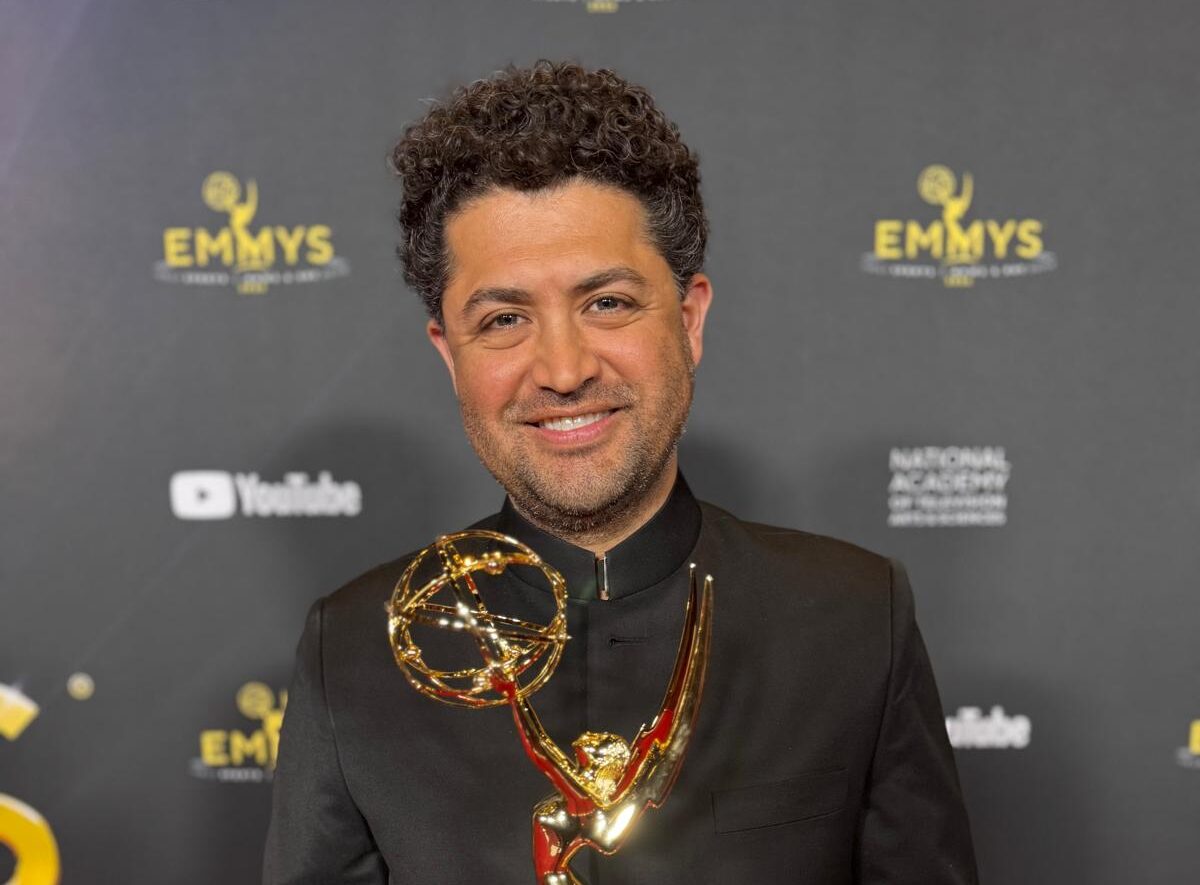
My most recent feature length documentary, Champions of the Golden Valley stands out. It began as a story about Afghan skiers in Bamyan, but evolved into something much deeper about resilience, displacement, and hope. What made it meaningful was not just the story itself, but what it represented—showing Afghans not through the lens of war, but as athletes, friends, and dreamers. The creative process was about honoring that humanity. Seeing it resonate globally and recently won an Emmy for Outstanding Sports Documentary. That has been deeply humbling experience! The film is streaming on Olympics.com.
If you could collaborate with any artist (living or historical) from the Muslim or ethnic diaspora, who would it be and why?
If I could collaborate with any artist, it would be someone like Terrence Malick. His work explores the inner life in a way that feels almost spiritual—using image, memory, and silence to express what language often can’t. There’s a poetic depth to how he approaches the human condition that I’m deeply drawn to, especially in how he allows meaning to emerge rather than forcing it.
What’s one misconception about your art form or your community that you’d like to challenge? What do you wish more people understood?
That stories from places like Afghanistan, and the greater Middle East, are only about war or suffering. That’s a narrow lens. There is joy, humor, creativity, and life in all its fullness. The challenge is not access to stories—it’s how we choose to tell them. Expanding that lens is something I care deeply about.
How can our community support your work and stay connected with you?
You can follow my work and stay connected through my website:
- www.baktashahadi.org
- Instagram: @baktashahadi
- LinkedIn: Baktash Ahadi
I’m currently working on several projects, including a film exploring veterans and healing, and continuing to use storytelling as a way to deepen connection and understanding across cultures and experiences.
I’m always open to collaborating on meaningful projects, whether in film, speaking, or advisory work, that aim to elevate underrepresented voices and bring greater clarity, empathy, and light to complex human stories. If there’s alignment, I’d welcome the opportunity to connect and explore what we might build together.