Trauma and Development
According to the BBC’s Global Story episode, war exposure creates what experts call “toxic stress”, which is a prolonged activation of the body’s stress response system. This constant fear (from bombings, displacement, or loss of family members) can disrupt normal brain development, particularly in young children whose brains are still forming.
Research echoed in other reports shows that trauma can alter the “developmental architecture” of a child’s brain, leading to long-term consequences for learning, emotional regulation, and physical health. (vijesti.me)
Children exposed to war often experience includes (but is not limited to), Chronic anxiety and hypervigilance, Nightmares and sleep disruption, Difficulty concentrating or learning and Emotional withdrawal or aggression
Such symptoms are not temporary. As humanitarian research notes, toxic stress can lead to lifelong mental health challenges if not treated. (warchild.net)
The Psychological Damage
Instead of the stability needed, children of war are granted unpredictability. The BBC podcast highlights how children in war zones often lose any and all sense of safety, even in their own homes.
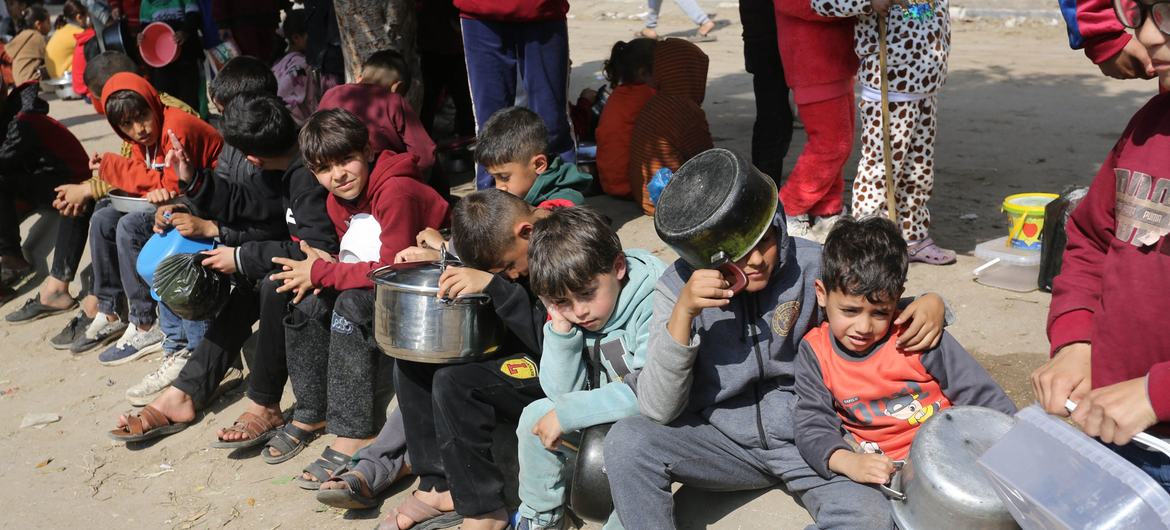
In places like Gaza, clinicians report that many children show signs of continuous traumatic stress disorder (CTSD), a condition caused by repeated, ongoing trauma rather than a single event. (The New Yorker)
Similarly, children in Ukraine continue to experience fear long after initial attacks, as bombings and displacement persist. More than one-third of Ukrainian children remain displaced, conveying just how instability is their normal. (UNICEF)
The Physical Consequences
The most immediate effects of war on children are physical. Across current conflicts, children are being killed, injured, and deprived of basic needs. In the escalating Middle East violence, over 1,100 children were killed or injured within days of fighting. (UNICEF)
In Sudan, 4.2 million children are expected to suffer acute malnutrition in 2026, with hundreds of thousands in life-threatening condition. (UNICEF)
Globally, 35.5 million children were acutely malnourished in 2025 alone, largely due to conflict-driven crises.
(Reuters). War destroys hospitals, schools, and water systems and removes the essential services children need to survive and grow. (UNICEF)
The Loss of Education and Identity
Another major consequence is the loss of education. Schools are often bombed, occupied, or inaccessible. According to United Nations reporting, conflicts worldwide have displaced millions, leaving children without stable access to schooling. (United Nations) Without education, children face limited future employment opportunities and an increased vulnerability to exploitation causing there to be a greater likelihood of recruitment into armed groups.
The Social and Moral Impact
Children of war often grow up surrounded by violence, which shapes their worldview. Exposure to brutality can normalize aggression or create deep mistrust of others. Experts cited in global reporting emphasize that war can “alter children’s lives, often irreparably,” affecting their relationships, identity, and sense of morality. (UNICEF)
This creates long-term societal consequences. A generation raised in conflict may struggle to rebuild peaceful communities, perpetuating cycles of violence.
Current Wars Affecting Children
The children of today are growing up in numerous active conflict zones.
Major ongoing wars include:
- Ukraine War : widespread displacement and infrastructure destruction (UNICEF)
- Gaza / Israel conflict : high child casualty rates and psychological trauma (UNICEF)
- Sudan Civil War : severe hunger, displacement, and child recruitment (UNICEF)
- Yemen War : prolonged humanitarian crisis (Council on Foreign Relations)
- Conflicts in the Sahel, Syria, and the Democratic Republic of Congo : ongoing instability and violence (Young Pioneer Tours)
Globally, one in five children now lives in a conflict zone, underscoring how widespread the issue has become. (Hansard)
A Generation Shaped by War
War affects children far beyond the battlefield. It reshapes their brains, damages their mental health, disrupts their education, and alters their future opportunities. The BBC’s Global Story podcast emphasizes that while children are remarkably resilient, recovery requires stability, support systems, and long-term care, which are resources often unavailable in war zones.
Without intervention, the effects of war on children do not end when the fighting stops. They persist for decades, shaping not only individual lives but entire societies.
Works Cited
- “2026 Brings No Respite to Children Living in Violence and Conflict.” UNICEF, 6 Feb. 2026. (UNICEF)
- “2026 Global Report on Food Crises.” Reuters, 24 Apr. 2026. (Reuters)
- “Armed Conflict: Children.” UK Parliament (Hansard), 4 Feb. 2026. (Hansard)
- “Child Casualties Rise Amidst Deepening Middle East Conflict.” UNICEF, 2026. (UNICEF)
- “Conflicts to Watch in 2026.” Council on Foreign Relations, 2025. (Council on Foreign Relations)
- “How Does War Affect a Child’s Brain?” BBC Global News Podcast, 2026. (WAMU)
- “More than a Third of Ukraine’s Children Remain Displaced.” UNICEF, 2026. (UNICEF)
- “Top 10 Crises the World Can’t Ignore in 2026.” International Rescue Committee, 2025. (Front page – US)
- “Toxic Stress in a Child’s Brain During Conflict.” War Child, n.d. (warchild.net)
- “What Active Conflicts Are There in the World in 2026?” Young Pioneer Tours, 2026. (Young Pioneer Tours)
- “World on Fire: Crisis and Emergency Response.” United Nations, 2025. (United Nations)
- “How Growing Up in War Really Affects an 11-Year-Old.” BBC News, 2026. (vijesti.me)