A National Gathering for Muslim Civic Advocacy
Let me be the first to tell you to pack comfortable shoes.
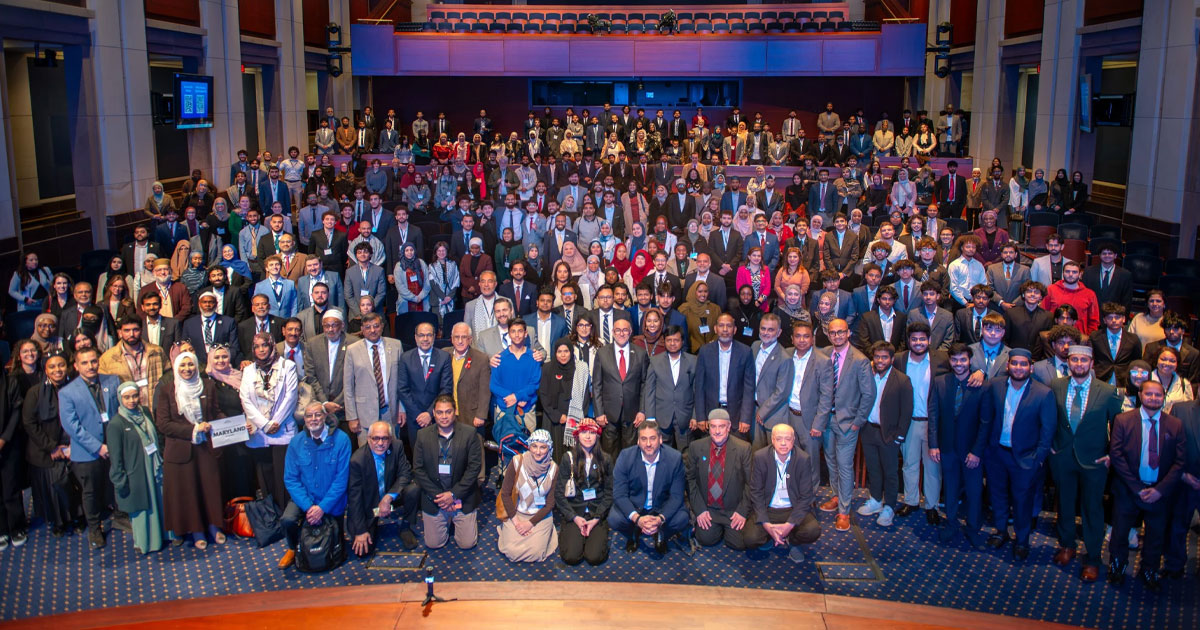
Organized by the US Council of Muslim Organizations (USCMO) in partnership with groups like Young Muslims, Islamic Council of North America (ICNA), Council on American Islamic Relations (CAIR), and Muslim Ummah of North America (MUNA), Muslim Advocacy Day 2026 celebrated its 11th year with young delegates to Capitol Hill from all over the United States.
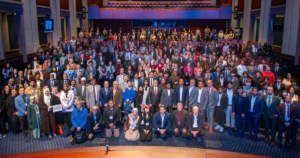
Delegates, organizers, and activists from across the US smile for a photo.
Donning Vela scarves and black tuxedos, teenagers and young adults focused their Congressional meetings on three top advocacy priorities: opposing the “Sharia Free America” caucus, defending free speech and immigrant rights, and challenging militarized foreign policy. For many participants, Muslim Advocacy Day was about new experiences in civic engagement, making friends, and demanding change from those in power. These perspectives set the stage for how the day unfolded for us all.
For me, it began with Doc Martens, setting my personal journey in motion.
Walking through the Rayburn and Cannon House office buildings felt surreal and oddly electrifying- knowing the spotless floors beneath my feet were home to decisions that affect hundreds of millions of American lives. The labyrinthian corridors and cavernous staircases made me feel like a certain boy wizard traipsing the magical halls of Hogwarts. Instead of robes and potions, what lay inside these walls was something solemn but no less magical… I’m in the halls of change.
Despite being briefed on the extreme amount of walking ad nauseam, I still underestimated it. Miles of on-foot trekking the streets of Manhattan surely prepared me for this, right? Wrong. By midday, between little sleep, brobdingnagian buildings, high-stakes conversations, and the pressure of properly representing at-risk communities, advocacy itself felt almost athletic.
Yet, that exhaustion shaped the experience.
What really makes advocacy effective?
If one sentiment was echoed throughout all of my interviews, it was that presence itself is political.
Safia Khattak of New Jersey’s 12th Congressional District said she attended out of “a desire to turn concern into action,” adding that too often issues affecting Muslim communities are discussed about them, but not with them. Constituents showing up in person with representatives and staffers shows the humanity behind hashtags and percentages.
Azeeza Evelyna of North Carolina’s 10th Congressional District framed attendance as a responsibility. “With everything going on in the world, where voices are being silenced and rights are being taken away,” she says. “I wanted to make sure to advocate and show up for the ones who can’t.” Even participants who arrived nervous described leaving with a sharper sense of civic possibility, despite initial apprehension. Aima Syeda of Maryland’s 6th congressional district said: “This was my first time, and I thought it would feel intimidating, but instead it felt empowering.”
Many participants, including myself and Sonia Bowers of South Carolina’s 5th Congressional District, who was attending for the first time, said they had not expected “to fully engage with congressional staff members in the capacity that I did.” For many, the event reframed advocacy not as abstract politics but as active participation, as necessary as it is accessible.
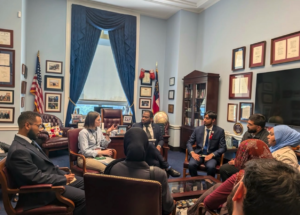
CAIR-Georgia Policy Director Megan Gordon lead a meeting with Rep. Hank Johnson’s Chief of Staff.
Source: @cairgeorgiaofficial