
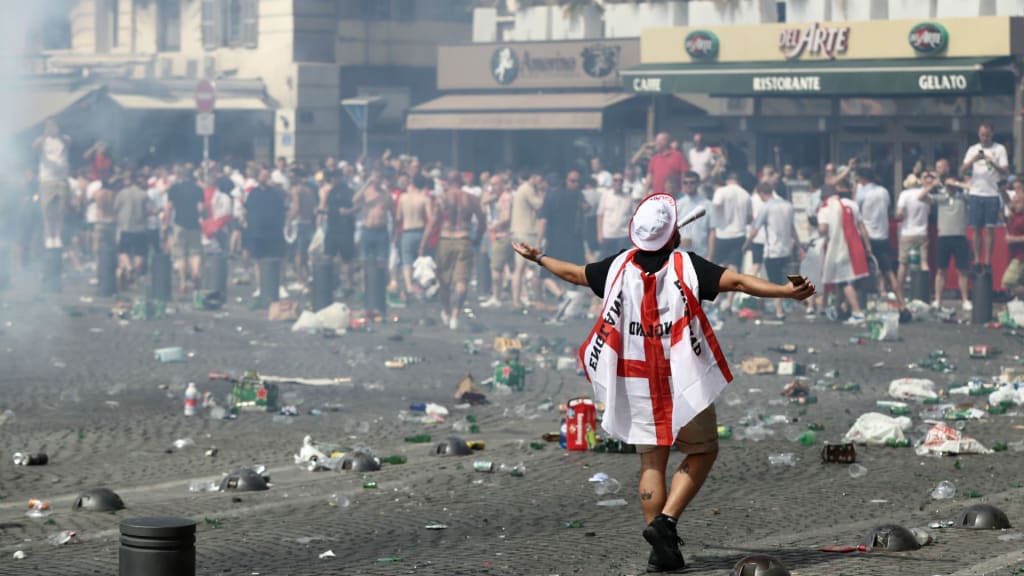
“Hooliganism” refers to disorderly, often violent behavior by groups of sports fans, most notably associated with football (soccer) culture in Europe during the late 20th century. While hooliganism became synonymous with fan violence and rowdy behavior, particularly from the 1970s onwards in the UK, its legacy is deeply intertwined with stadium safety and the modernization of global sporting events. One of the most pivotal moments in history concerning ‘hooliganism’ is the Hillsborough Stadium disaster of 15 April 1989, which reshaped not only English football but also the approaches to crowd control and event security across Europe.
The Rise of Football Hooliganism
Football hooliganism emerged prominently in the United Kingdom during the 1960s–1980s, characterized by organized groups (often called “firms”) engaging in fights, vandalism, and territorial rivalry. By the 1970s and 1980s, hooliganism had become a major social concern, prompting heavy policing and structural changes in stadiums.
Authorities increasingly treated fans as potential threats rather than spectators, leading to measures such as high perimeter fences and segregated terraces. These policies aimed to control violence but often created confined, overcrowded environments that increased safety risks.
The broader culture of hooliganism contributed to a perception of football as dangerous and disorderly, influencing both media narratives and government policy. The manufactured environment setting the stage for later tragedies.
The Hillsborough Stadium Disaster (15 April 1989)
On 15 April 1989, during an FA Cup semi-final between Liverpool and Nottingham Forest at Hillsborough Stadium in Sheffield, a catastrophic crowd crush occurred.
Ninety-six Liverpool supporters died (later officially recognized as 97), and hundreds were injured.
The disaster unfolded when police opened an exit gate to relieve congestion outside the stadium, allowing a large influx of fans into already overcrowded standing pens. With inadequate crowd control and poor stadium design, spectators were fatally compressed against barriers.
Initially, authorities and media outlets blamed the fans, invoking the stereotypes of hooliganism. However, later investigations, including the Taylor Report, concluded that the primary cause was police mismanagement and systemic safety failures, not fan behavior. A 2016 inquest ruled the deaths “unlawful killings,” further confirming institutional responsibility (AS USA).
Crucially, Hillsborough exposed how anti-hooligan measures, such as fenced terraces and aggressive policing, had inadvertently contributed to unsafe conditions. As one analysis notes, the “seeds” of the disaster lay partly in football’s long struggle with hooliganism and the policies designed to contain it (redandwhitekop.com).
Aftermath: Transformation of Football Culture and Safety
The Hillsborough disaster marked a turning point in global football governance.
The Taylor Report (1990) recommended sweeping reforms, including the conversion to all-seater stadiums, removal of perimeter fencing and improved crowd management and emergency planning. These changes fundamentally altered the spectator experience and significantly improved safety standards.
More broadly, Hillsborough shifted public perception. Football stadiums were no longer seen primarily as sites of disorder but as spaces requiring careful design, regulation, and accountability
(ResearchGate). The tragedy also prompted a reassessment of how authorities should treat fans. As individuals whose safety must be prioritized, and not as threats.
Hooliganism in the Modern Era
While hooliganism has not disappeared, it has declined significantly in many countries due to enhanced surveillance (CCTV, facial recognition), stricter policing and international cooperation and fan identification systems and banning orders.
Modern football governance emphasizes prevention, intelligence-sharing, and fan engagement rather than purely reactive force.
Implications for the 2026 FIFA World Cup
The upcoming 2026 FIFA World Cup, hosted by the United States, Canada, and Mexico, will be one of the largest sporting events in history. The lessons from hooliganism and Hillsborough remain highly relevant in several ways.
1) Crowd Safety Over Crowd Control
Hillsborough demonstrated the dangers of prioritizing containment over safety. Modern-day World Cup planning emphasises Real-time crowd monitoring, Open, accessible stadium designs and Emergency evacuation protocols.
2. Policing Strategy
Heavy-handed policing rooted in assumptions of hooliganism can escalate risk. Instead, contemporary approaches favour strategies such as, De-escalation tactics, Community-based policing and International coordination on high-risk fans.
3. Stadium Infrastructure
All-seater stadiums, regulated capacities, and advanced ticketing systems are now standard. This being a direct outcome of post-Hillsborough reforms.
4. Media and Misinformation
The Hillsborough case also revealed how misinformation can shape public perception. For global events like the World Cup, accurate communication is critical to avoid panic or unjust blame.
5. Globalization of Fan Culture
Unlike the localised hooligan firms of the past, modern tournaments involve diverse, international fan bases. This requires sophisticated planning that accounts for cultural differences, travel logistics, and the large-scale movement of supporters.
The history of hooliganism is inseparable from the evolution of modern football. While it once drove policies focused on control and containment, the Hillsborough disaster exposed the flaws in those approaches and catalysed a shift toward safety, and fan-centred design.
As the 2026 FIFA World Cup approaches, these lessons remain vital. The legacy of Hillsborough serves as a reminder that effective event management must balance security with humanity and ensure that the mistakes of the past are not repeated on the global stage.
Works Cited
- “Hillsborough Disaster.” Wikipedia, 2026. (Wikipedia)
- “Hillsborough Stadium.” Wikipedia, 2026. (Wikipedia)
- “Safe Standing.” Wikipedia, 2025. (Wikipedia)
- “Taylor Report.” Wikipedia, 2026. (Wikipedia)
- AS English. “Liverpool Fans Who Died in Hillsborough Disaster Were Unlawfully Killed.” 2016. (AS USA)
- Robinson, Jessica S.R. “The Place of the Stadium: English Football Beyond the Fans.” 2010.
(ResearchGate) - Scraton, Phil. “Media Impact and the Hillsborough Disaster.” (redandwhitekop.com)
- Academia.edu. “Term Paper on Hooliganism.” (academia.edu)