
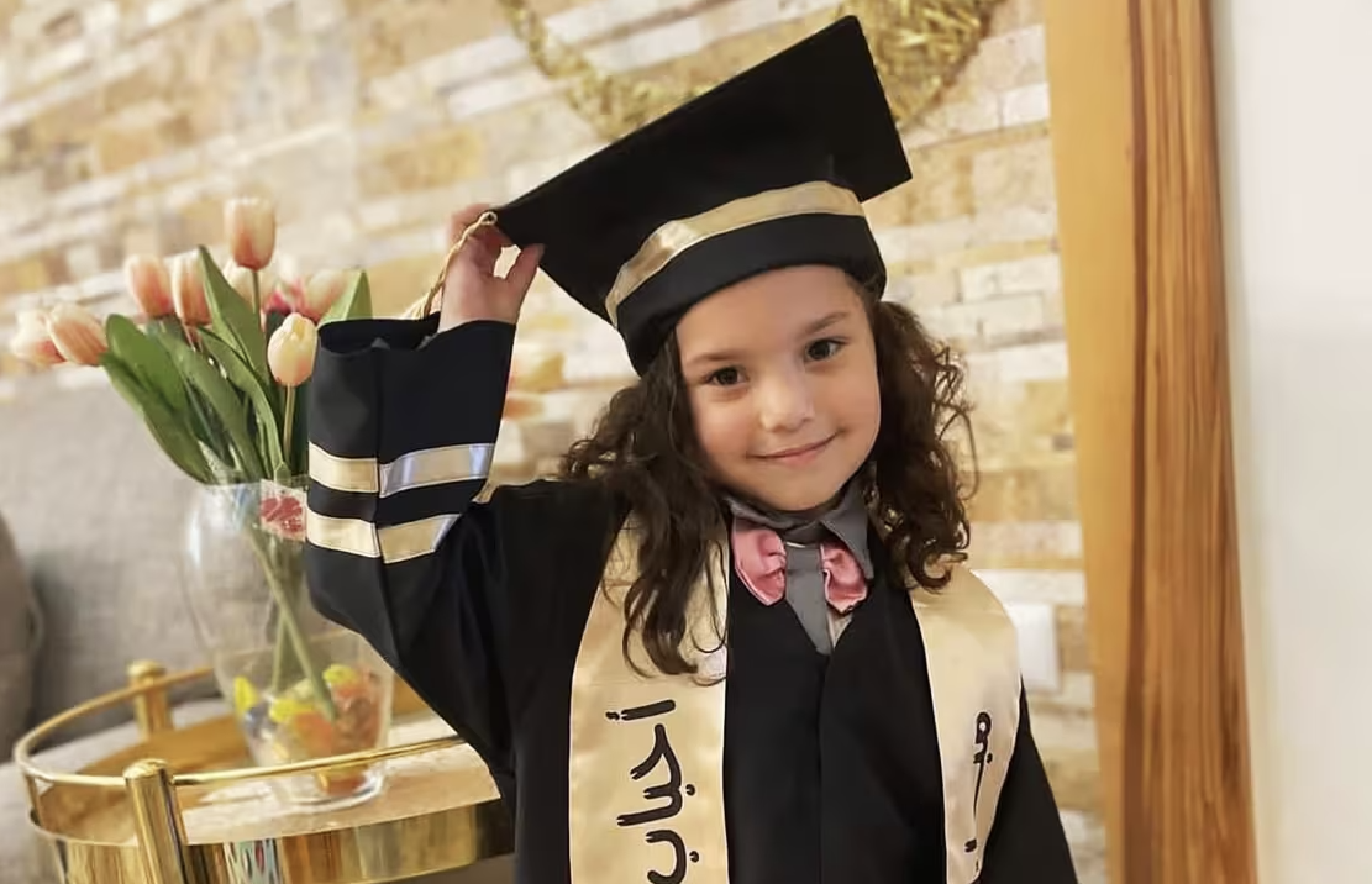
Her name was Hind Rajab Hamada.
On January 29, 2024, Israeli forces mercilessly fired on a civilian vehicle in Gaza after issuing evacuation orders for residents to flee south. The car, carrying members of an extended family attempting to escape the bombardment, was struck and left immobilized on a road in Gaza City. Among the seven occupants was Hind Rajab Hamada, a six-year-old Palestinian girl from Gaza who survived the initial attack and remained trapped inside the vehicle for hours.
As the corpses of her aunt, uncle, and four cousins lay lifeless around her, Hind managed to place an emergency call to the Palestinian Red Crescent Society, setting off a prolonged and ultimately fatal (and futile) rescue attempt. What followed was not a singular moment of violence, but a prolonged and nightmarish ordeal shaped by fear, distance, protocol, and obstruction, unfolding in real time and whose echoes would later be heard by millions around the world.
The Voice of Hind Rajab, directed by Kaouther Ben Hania (known for The Man Who Sold His Skin (2020) and Four Daughters (2023)), debuted on December 17, 2025. Premiering nearly two years after the 2024 massacre, the film follows employees at the Palestinian Red Crescent Society desperately attempting to deliver emergency aid to Rajab, the sole survivour, with dramatizations of emergency workers racing against time and the situation’s emotional impact as they coordinate paramedics who could save her.
With a runtime of 1 hour and 29 minutes (a possible nod to 1.29.24, the date Hind and her family were murdered), viewers are immersed in the harrowing reality of volunteers, dispatch employees, emergency personnel, and Hind herself. Real audio recordings of the dispatchers, volunteers, and child’s final moments are interwoven throughout.
As the agonizing events on screen progressed, the sounds of racking sobs and soft wails filled every inch of the theatre. Children silently weeped beside their parents while grown adults sobbed and shook with grief, especially whilst hearing the desperation and fear in Hind’s voice. After the film wrapped up and a standing ovation commenced, I left the theatre and entered the lobby to see friends and strangers in solemn, tearful embraces.
Outside the theatre, I spoke with Catherine and John, a couple from Manhattan who attended the screening in solidarity. Like many in the audience, they lingered after the film, visibly shaken.
Catherine told me she learned about The Voice of Hind Rajab through her husband, who heard about the project from someone who had invested in it. Going in, she expected the film to be difficult, but still found herself unprepared for its impact. “I knew it would be very heart-wrenching, and we were already familiar with parts of the story,” she said. “But what they captured was incredible.”
When I asked how she felt after watching, her answer was immediate and unfiltered: “Gutted. Honestly, sick to my stomach.”
For Catherine, what lingered most was the scale implied by the story. “Just the realization that this is one story among tens or hundreds of thousands of others,” she said. She later drew a parallel to seeing Schindler’s List in theatres when it was first released (1994) recalling the same heavy silence at the end of the screening. “The feeling was very similar; when the film ends, everyone is crying, no one speaks, and the audience stays seated through the final credits. I hope this film receives similar recognition for documenting what’s happening to Palestinians and for confronting people who deny that a genocide is taking place in real time.”
Her advice to future viewers was simple, and quietly devastating: “Bring your Kleenex, and bring a strong stomach.”
John, who first heard about the film through the news, described a different but no less overwhelming reaction. He stated he had no particular expectations going in, but that seeing the events recreated and hearing the recordings made the story feel inescapably real. “I knew what the story was,” he said, “but it’s different when you see it recreated and hear the voices again.”
After the screening, he described feeling “angry and hopeless.” The moment that stayed with him most came early. “The first time you hear her voice, everything stops,” he said. “Because you know it’s a real recording of a six-year-old child who doesn’t understand what just happened to her.”
Unlike Catherine, John didn’t find the film easily comparable to other works. “We’ve never had a genocide documented in real time like this: on video, on television, in the press, while still being suppressed,” he said. “That creates an overwhelming sense of helplessness.”
When asked what viewers should do after watching, his answer extended beyond the theatre. “Watch it and then be very vocal afterward,” he said. “Talk about how you feel about something that actually happened and was portrayed factually.”
Both Catherine and John emphasized the importance of recognizing the broader systems the film exposes. Catherine noted that many people still do not understand how deeply restricted daily life in Gaza and the West Bank has been for decades. “Where people can go, whether they can work, whether they can travel… that control affects everything,” she said. “What the film shows is just a small glimpse of that reality during wartime, but it existed long before this moment.”
John added that the film’s depiction of delayed emergency response reflects a documented reality. “Ambulances and the Palestinian Red Crescent are frequently hindered or delayed when trying to reach people in need,” he said. “Those delays have life or death consequences.”
As our conversation came to a close, the couple reflected on the film’s place within a much larger, unfinished record: one that demands continued attention. There are, as Catherine put it, “probably hundreds of thousands of stories like this. This is just one of them.”
The Voice of Hind Rajab is unlikely to receive national rollout. Instead, indie and independently owned theatres are your best shot to bear witness to this masterpiece before it is available for streaming. Film Forum, located at 209 West Houston Street, New York, NY 10014, will be hosting multiple daily screenings in SoHo through Christmas evening.