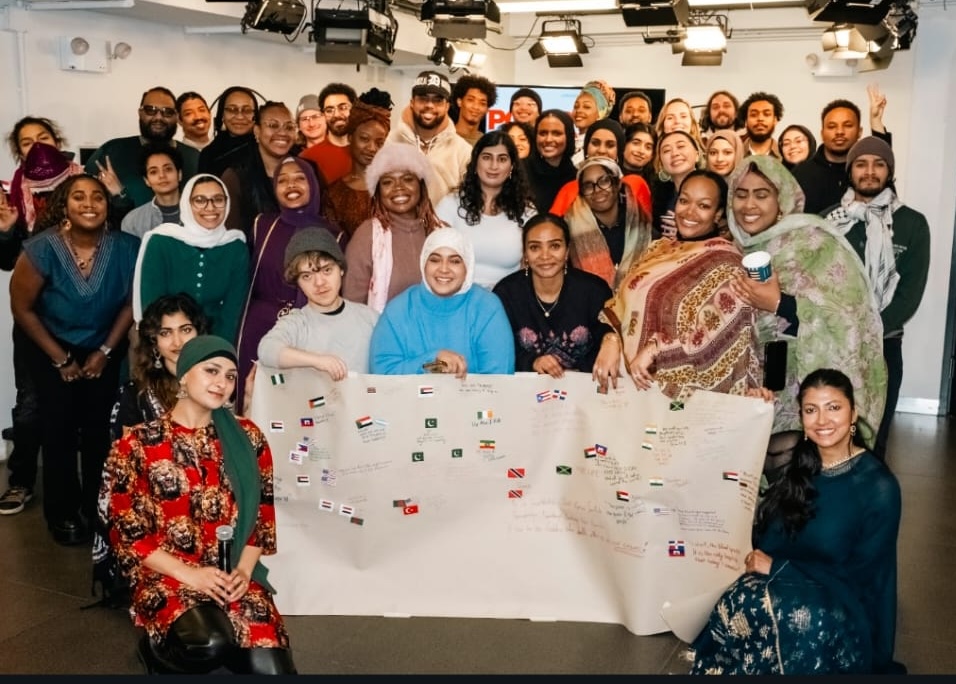
On Saturday, January 23rd, The People’s Forum in Midtown Manhattan became a space of gathering, storytelling, and shared purpose for Taste of Sudan, a community fundraiser in support of the Sudanese United Relief Front (SuRF). People travelled from across New York City and beyond to experience authentic Sudanese cuisine, local poetry, academic anecdotes, and conversations rooted in global solidarity.
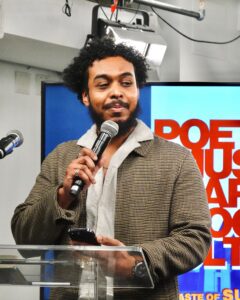
SuRF spokesperson Nadir tells guests about the organization.
At the heart of the event was food prepared by Long Island based Sudanese chef Sabir Mandil. Guests were served dakwa, falafel, vegetables, and freshly brewed hibiscus tea, offering a vibrant sensory connection to Sudanese culture. The room filled with warmth as people shared meals and stories, reminding attendees that food is not only nourishment but a testament to memory and lasting heritage.
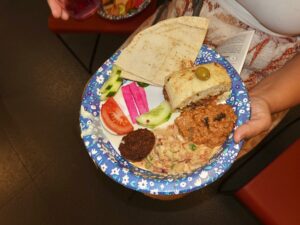
A vibrant plate shows mixed vegetables, falafel, bread, and dakwa, a signature Sudanese peanut paste.
Alongside the cuisine were performances by local poets and speakers who situated Sudan’s current crisis within broader historical and political contexts. Doreen reflected on how the evening connected personal expression to global systems, noting the power of hearing poems and analysis together. She described Sudan’s suffering as part of a wider pattern of imperial extraction, calling the current conflict a “so called proxy war” driven by the merciless plundering of gold and resources, a sordid tale repeated across Africa and much of the Global South.
For performers, the night reinforced the importance of coalition-building. Karina shared that the event highlighted the need for intersectionality and solidarity across borders. “I truly believe in solidarity for all countries across the global south,” she said, stressing how vital it is to speak openly about the conditions affecting the global majority. Her performance illustrated how cultural spaces can also be political ones, where struggles are linked rather than isolated.
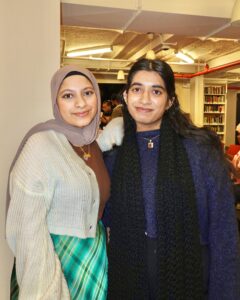
Guests Inara and Zehra smile for a photo during the event.
That collective responsibility resonated with many attendees. Ayla reflected that the event demonstrated people-powered action in the face of institutional inaction. “When our governments are choosing not to do anything,” she said, “I feel like it’s the job of the people to come together.” Her words captured the frustration with political stagnation coupled with flickers of hope in community-led responses.
Multiple organizations collaborated throughout the evening to raise funds for SuRF, reinforcing the idea that meaningful change emerges through shared networks rather than individuals. Conversations seamlessly unfolded between folks as poetry blended into dialogue, and advocacy merged with art. Taste of Sudan became a breathing example of how culture, education, and activism can coexist in a shared space.

Chef Sabir Mandil shares facts about Sudanese cuisine.
By the end of the night, what lingered was not only the flavour of hibiscus tea or the rhythm of electric guitar, but a shared understanding: the struggles of Sudan are not isolated. It is tied to century old systems of colonialism, imperialism, and resource extraction that affect communities worldwide.
Taste of Sudan reminded attendees that resistance can take many forms, be it a meal, a microphone, or a conversation with someone new. In a time when current events often reduce suffering to statistics and humanity to headlines, the gathering returned the narrative to people: their food, voices, and call for justice.
Call to Action
To learn more about the Sudanese United Relief Front (SURF) and support their ongoing campaigns, follow them on Instagram @sudaneseresistancefront. Sabir’s culinary expertise can be enjoyed on Instagram @that_zol, where he shares recipes and personal anecdotes about Sudanese culture and cuisine.
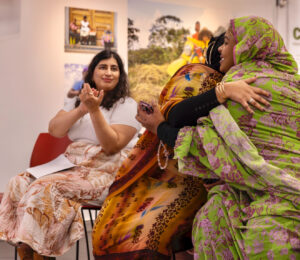
Audience members smile in warm embraces.