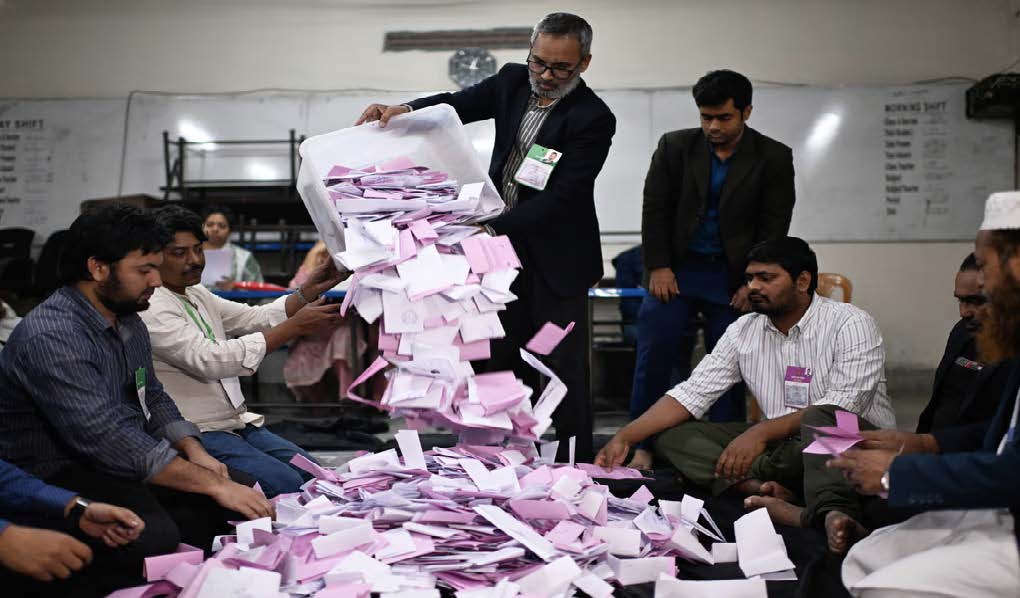
The 13th Parliamentary Elections of Bangladesh, held in February 2026, marked a significant turning point in the country’s political landscape. With the centre-right Bangladesh Nationalist Party (BNP) securing over two-thirds of parliamentary seats (a decisive victory), this election is seen as the first truly competitive vote since 2008. Previous elections were surrounded by political unrest, protests, and allegations of election manipulation.
Timeline Leading up to the 13th Parliamentary Elections: How we arrived at this point
2021: Growing Discontent with the Awami League Government
The political tension between the ruling Awami League (AL) and opposition parties began to escalate in 2021. Under Prime Minister Sheikh Hasina’s leadership, the AL had maintained a strong
hold on power, but dissatisfaction among the public regarding economic inequality, rising prices, and the government’s handling of key issues such as the pandemic began to grow.
The opposition parties, led by the BNP and the left-wing alliance, began calling for electoral reforms and more transparent governance. Street protests, particularly by students and labor unions, erupted in response to alleged corruption and authoritarian practices. This unrest set the stage for the 2024 local elections, which were tarnished by accusations of rigging and the opposition’s calls for a fairer electoral system.
2024: Controversial Local Elections
The 2024 local elections were a major flashpoint in the lead-up to the national elections. The BNP and other opposition groups alleged that the ruling Awami League had manipulated the voting process through ballot stuffing, vote buying, and the intimidation of opposition candidates. These allegations sparked widespread protests, and violence between AL supporters and opposition activists escalated, leading to several deaths and injuries.
In response to these allegations, the government insisted that the elections were fair, and Sheikh Hasina’s administration pushed through reforms that they claimed would improve the electoral process. However, these assurances were not enough to quell the growing unrest. The BNP and other political groups, which had boycotted the local elections, vowed to continue their opposition to the ruling party’s control over the political process.
2025: The Call for Electoral Reform
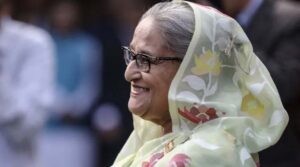
By 2025, as Bangladesh approached its national elections, calls for electoral reform had increased. The Bangladesh Nationalist Party demanded the establishment of a neutral caretaker government (a non-political interim government) to oversee the elections, a provision that had been used in previous elections but had been abolished by the Awami League government in 2011. The demand for this neutral body was framed as essential to ensuring the credibility of the elections and restoring the trust in Bangladesh’s democratic process.
Despite these calls, the government remained resistant. Sheikh Hasina and her allies argued that the current electoral system was legitimate and that no caretaker government was necessary. This deepening divide between the ruling party and the opposition fueled growing tensions.
2026: The 13th Parliamentary Elections
The 13th Parliamentary Elections were officially held in February 2026, but they were far from free of controversy. The elections were characterized by significant violence, voter suppression, and allegations of vote-rigging. Reports emerged that the Awami League government had exerted control over the police and security forces to prevent opposition candidates from campaigning freely.
Despite these challenges, the BNP, led by its chairman Tarique Rahman, son of former Prime Minister Khaleda Zia, dominated in the elections. The party secured a resounding victory, capturing a majority (over two-thirds) of seats in the 300-member parliament. However, the elections were still marked by widespread protests and accusations of fraud.
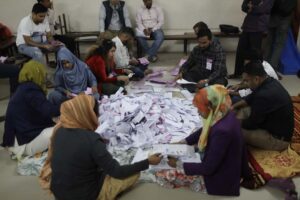
Opposition parties and international observers have expressed concerns over the transparency of the vote count, citing reports of voting irregularities in several constituencies. The United States and European Union both raised alarms about the fairness of the election, calling for a thorough investigation into the allegations.
The Dominance of the Awami League
Since 2009, the AL has dominated Bangladesh’s political scene, with Sheikh Hasina at the helm. Under her leadership, the country experienced significant economic growth and development, with a booming textile industry and increasing foreign investment. However, the country’s democratic institutions have weakened over time, with an increase in political crackdowns on conflicting voices.
In 2018, the AL won a controversial victory in the 11th parliamentary elections, leading to widespread allegations of vote rigging and voter suppression. The opposition parties, including the BNP, claimed that the AL had used force and manipulation to secure its victory. The lack of an independent electoral commission and the absence of a neutral caretaker government further intensified these allegations.
Despite these challenges, the AL has maintained a firm grip on power, using its influence over state institutions, including the media, judiciary, and police, to suppress opposition. The party’s ability to shape public opinion through its control of the media and its deep connections with the military and law enforcement agencies has allowed it to remain in power for nearly two decades.
The Role of the Bangladesh Nationalist Party (BNP)
The BNP has long been the main opposition party in Bangladesh. Founded by the late former President Ziaur Rahman, the party has struggled to maintain its influence over the years. Its leadership, particularly under the controversial leadership of Khaleda Zia, has faced various legal challenges, including charges of corruption and embezzlement. Along with internal divisions, these challenges have weakened the BNP’s ability to mount a serious challenge to the AL in previous elections.
However, the political landscape in Bangladesh shifted in recent years as the AL’s grip on power began to loosen. The 2026 parliamentary elections saw the BNP galvanize support, especially from disenfranchised youth and urban voters disillusioned with the AL government. The BNP’s victory in the 2026 elections marks a remarkable comeback for the party, though questions remain about the legitimacy of the electoral process.
Challenges Facing Bangladesh’s Democracy
Despite the BNP’s victory, Bangladesh faces significant challenges to its democratic future. The political system is still highly polarized, and many opposition parties are pushing for reforms to ensure free and fair elections in the future.
The 13th Parliamentary Elections in Bangladesh have reshaped the country’s political landscape. The BNP’s victory, while significant, has been clouded by allegations of election manipulation and violence. As Bangladesh moves forward, the country will need to address the deep-rooted issues of electoral integrity, political repression, and press freedom to ensure a more democratic future. How the BNP handles its victory and whether it can implement meaningful reforms will be key to the nation’s democratic trajectory in the coming years.
Sources:
- India Tomorrow. “Bangladesh’s 13th Parliamentary Elections: A Resounding Victory for BNP Amidst Challenges and Controversies.” India Tomorrow, 19 Feb. 2026, https://indiatomorrow.net/2026/02/19/bangladeshs-13th-parliamentary-elections-a-resounding-victory-for-bnp-amidst-challenges-and-controversies/.
- “Bangladesh: Democracy Under Siege.” BBC Global News Podcast, BBC, 2026, https://www.bbc.co.uk/podcasts/series/globalnews.
- “Bangladesh’s Political Crisis and the Road to the 13th Parliamentary Elections.” The Economist Podcast, The Economist, 2026, https://www.economist.com/podcasts.
- Reuters. “Bangladesh Elections Marred by Violence and Allegations of Fraud.” Reuters, 2026, https://www.reuters.com/article/bangladesh-elections-2026-idUS.
- Al Jazeera. “The Political Landscape of Bangladesh: Rising Tensions Ahead of the 2026 Parliamentary Elections.” Al Jazeera, 2026, https://www.aljazeera.com/news/2026/1/30/bangladesh-elections.
- Human Rights Watch. “Bangladesh: Rights Violations in the 2024 and 2026 Elections.” Human Rights Watch, 2026, https://www.hrw.org/report/bangladesh-elections-rights.
- United Nations Human Rights Council. “Bangladesh: Electoral Integrity and Political Repression.” UN Human Rights Council, 2026, https://www.ohchr.org/en/countries/bangladesh.