
The Aorta of Empire
Congress’s grandeur feels theatrical- ornate like theater sets, maze-like, and demanding to navigate. And yes, the walking is relentless.
The endless walking surprised me; one building alone required impressive footwork.
To assuage the exhaustion, however, was the beauty of the Capitol complex, which served as a pleasant interruption to the fatigue. Ornate ceilings, pristine marble, enormous columns, and historic paintings all made it impossible not to feel history, breathing upon us with every footstep.
Mariam Khan of Virginia’s 11th district poignantly coined the term “aorta of empire.” “Perhaps strategic bureaucracy is rooted in a belief that the system is an end-all, be-all worth fighting for, rather than a means to work within the here and now,” she says. Maybe the change isn’t so much in committing to one specific action, but rather in renewing my commitment to the movement each time I act.”
After a short security screening, it was startling to realize how congressional offices are, in many ways, public-facing spaces. People can walk in. Constituents can request meetings. Staffers and secretaries briskly pace the halls in pointed heels and crisp slacks. Democracy, at least in an architectural sense, invites entry. And I wasn’t the only one surprised.
Sofia Khattak, a young constituent of New Jersey’s 12th district, noted one of her more memorable moments was realizing “even brief conversations in those rooms can contribute to shaping real policy decisions. It made advocacy feel tangible and immediate.” she remarks. “This was my second time participating, it felt even more impactful than my first. I came in with a better understanding of the process, which made the experience more intentional.”
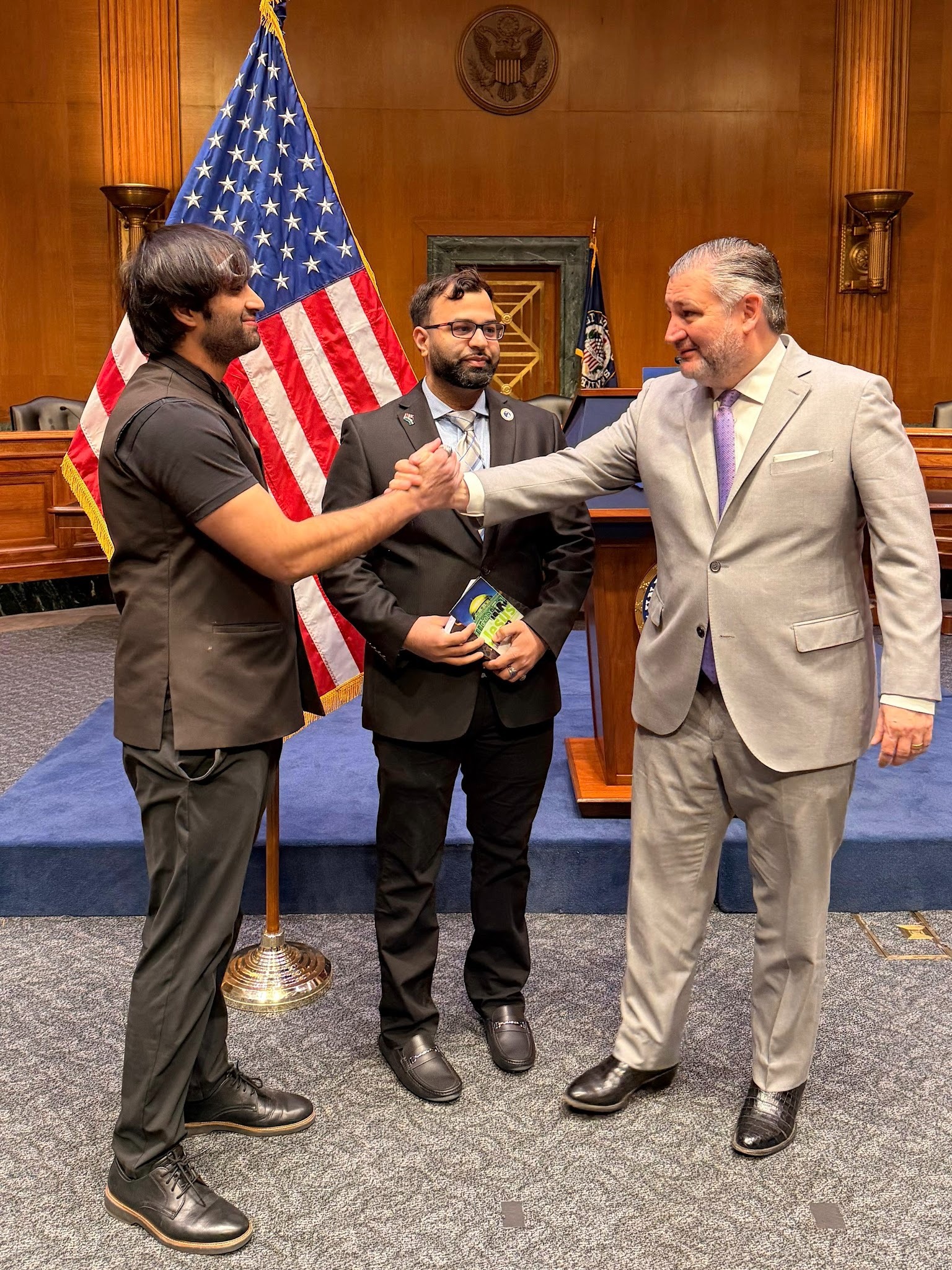
Members of ICNA-NY shake hands with Senator Ted Cruz, who was gifted an English copy of the Holy Quran