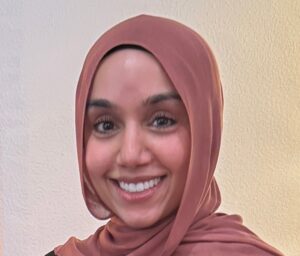
What’s the story behind your creative journey? Tell us how you got started, and what moment made you realize this was your calling?
I truly believe my creative journey was meant to be. It started with a quirk: constantly getting in trouble for doodling henna designs on my schoolwork, earning me the title of “class artist” by 5th grade. Then came a high school scheduling fluke: I was accidentally placed into film photography instead of drawing. Because the school was small, I was stuck. Within a week, I was in love. As the quiet middle child of a big Desi family, the darkroom gave me a voice—from the creative direction to the tactile magic of watching memories surface in the developer.
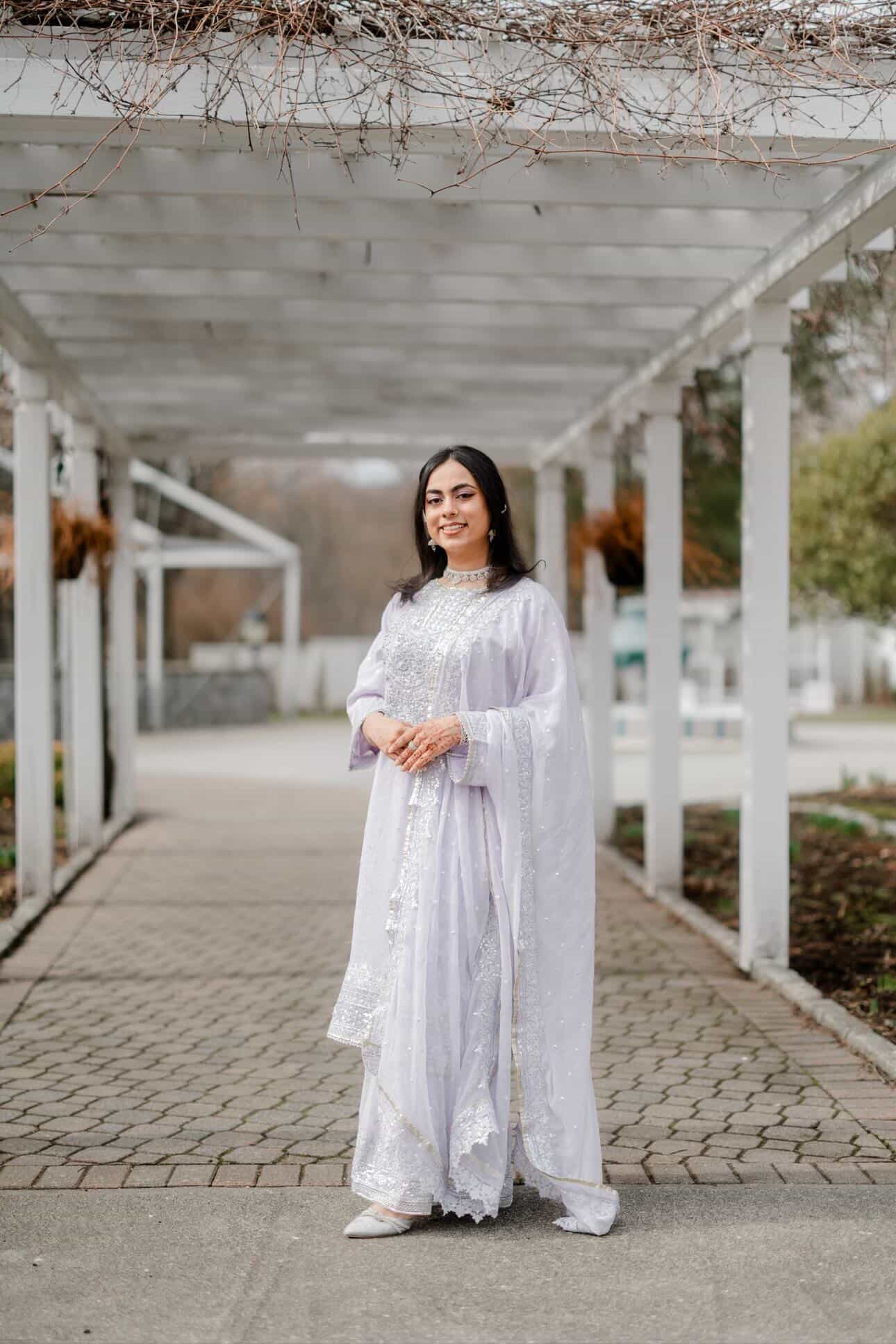
I assumed this was just a “high school love,” but my school handed me a camera for my senior Umrah trip. When I showed my college friends those photos, they saw a perspective I hadn’t yet claimed. They gifted me my first camera that summer, urging me never to stop documenting. Today, running my own wedding photography business, every frame feels as magical as that first roll of film. I’m eternally grateful to the teachers, family, and clients who have had faith in my craft since those first recess doodles.
How does your cultural or faith background influence your work? We’d love to hear about the unique perspective you bring to your art.
I grew up with no photos of my parents or my family back home, and my mom carried a little disposable camera around everyone to take photos of us. I am first-generation Pakistani-American, and my parents actually moved here just 2 months before I was born in 1998. There were no cell phones, and we only got to exchange photos with our relatives back home a few times a year, taking and exchanging photos was simply not accessible. Not only that, but we grew up in Connecticut, where there were barely any Muslims and Pakistanis, so we were further disconnected with our roots.
Everything I knew about our family, our heritage were through the stories my mom painted with her words. When she’d talk, I could only imagine those details, the way her childhood kitchen looked, the wrinkles my grandmother had softened into, the red of my mom’s wedding dress.
Her stories filled me with mystery of the world and the unseen. I spent quite some time alone, sheltered, bored, but curious. In moments like that you find a love for how dust falls in light, you notice how the sun moves with the seasons when you’re 7, you play with your eyelids to see how things go in and out of focus. And when you finally do go into the world, everything is strangely beautiful, deeply poetic, and simply art. And, it all deserves to be documented and shared.
What’s a project you’re especially proud of, and what made it meaningful to you? Walk us through the creative process and why it holds a special place in your heart.
Each wedding I photograph is an experience both intimate and grand. Having captured over 100 weddings, I feel like a keeper of stories tucked away in every frame—ethereal ceremonies, celebrations of all sizes, and customs from all over the world.
Some of my favorite moments are those I meticulously ideate, like creating dramatic bridal portraits with multiple flashes or curating a 15-hour engagement session in Pittsburgh. Others are completely out of my control, yet I’m honored to witness them: the hidden glances, a sudden flash of lightning at the end of a sunrise session, or the weight of a parent’s tears during a rukhsati.
While the event is the core of my work, a project I’ve recently re-found a deep love for is creating printed albums. After the energy of the wedding settles and the digital gallery is delivered, a new collaborative process begins. There is a specific, quiet emotion I feel during the final quality check before shipping an album. Seeing these moments physically in my hands—knowing they will be passed down for generations—is a very full-circle moment for me. The girl who grew up without photos now makes sure others never have to.
If you could collaborate with any artist (living or historical) from the Muslim or ethnic diaspora, who would it be and why?
I’ll sound like a fake art nerd because my dream collaborators aren’t visual artists at all! First is Rumi, the Sufi mystic. Expression hasn’t always come easy to me, but observance has. Rumi expresses the world in a way that feels ethereal yet deeply human. Interestingly, I’ve had Catholic clients tell me they hired me because my work captures something “mystical”—a comparison that is a massive honor.
Secondly, I have a deep love for Bushra Ansari. My parents grew up watching her, and I became a fan as a teenager. I believe art should alleviate stress, and her comedic style is so whimsical and “badass” while still upholding tradition.
Lastly, a recent “hyperfixation” of mine is Maanu. Growing up without music, I’ve woven through phases of Taylor Swift and Hozier, but seeing a Muslim-Pakistani artist rise when the world feels pitted against us is incredibly inspirational. I recently went to his show in NYC; I arrived with realistic expectations, but the experience—and the photos I captured there—left me completely captivated. To collaborate with someone who continues to create and connect across such complex cultural divides would be a dream.
What’s one misconception about your art form or your community that you’d like to challenge? What do you wish more people understood?
The biggest misconception is that photography is “easy.” People see the technical side—learning manual settings, picking lenses, or finding an editing style—and assume that’s the bulk of the work. While that is part of it, the true depth of this craft is how intensely intimate it becomes.
I often joke that I “make men cry for a living.” Sometimes they are crying in the moment and I’m there to witness it; other times, they see their final photos and the emotion just hits them. Beyond the aesthetics, I am often the one capturing the most vulnerable chapters of a person’s life. There is nothing easy about receiving a message that says, “So-and-so just passed; thank you for capturing this photo of us.”
You become connected to families in ways you never expect. You watch them grow; you see them lose the very people you once stood across from with a lens. Their lives blend into yours in a way that is truly indescribable. It isn’t just about “taking a picture”—it is a deeply beautiful, immense honor to hold these memories for them.
How can our community support your work and stay connected with you?
I am constantly inspired by the people around me, and I’m always looking for fellow Muslims and creatives to connect and collaborate with. I love to join in on events (and sometimes even document them!) during my off-weekends, so If you have a unique vision or a community event coming up, please let me know!
You can follow along with my daily journey and see behind-the-scenes moments on my Instagram stories @fatimaizzatphotography, or explore my full portfolio at fatimaizzatphotography.com. I can’t wait to connect!