The nature of Tiktok’s existence is quite philosophical. The social media app’s integration in the lives of millions around the world have given its issues a weighty importance. The potential that it has to influence masses, constitute a threat to national and personal security, exacerbate mental health problems, and act as a target in multiple geopolitical conflicts make it an extremely polarizing platform.
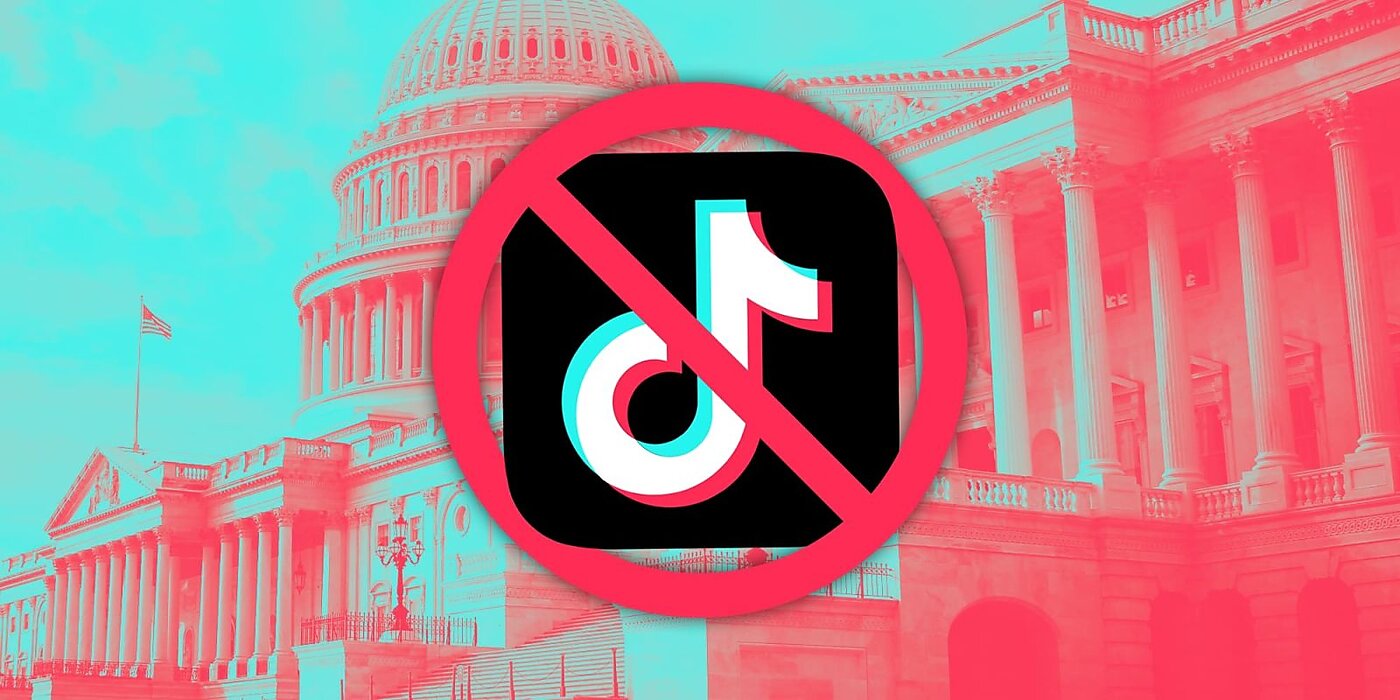
As you may have heard, somewhat recently, TikTok has been forced into a corner. The Protecting Americans from Foreign Adversary Controlled Applications Act, passed in April of 2024, has effectively created a situation where TikTok must sell its U.S. operations, or face a ban. Questions arise as to the legality of such a bill, and the motivations behind the parties involved should be analyzed to clarify what brought us to this decision.
This is the first part of a three-part analytical series on the progression of the U.S. TikTok ban.
At first, I was going to argue for one faction, namely TikTok. I would have followed the narrative that TikTok is innocent until proven guilty, and that the government is lacking in actual evidence to support its claims. To some extent, that may be true. However, once I began to delve more into the details, I realized that the situation is more nuanced than simply making TikTok out to be a martyr. Rather, I adopted the stance of a pragmatist, acknowledging the potential infringements of the governments, the shortcomings of TikTok, and how this deal benefits or harms international actors, like Israel. In that sense, the purpose of this writing is to explicate on the why of this ban–to bring an understanding of how we reached this development through analysis of key players and events.
To reveal the impetuses in this TikTok saga, we begin by understanding the historical development of the hit social media platform.
And you might think that it is overkill to rewind the full history of TikTok, but let me remind you, TikTok was only launched in 2016. And as we will see, the historical progression exposes and demystifies the array of motivations behind its sensational ban.
First Suspicions of Influence
When ByteDance created a short-form video platform for Chinese users known as Douyin, its success inspired the creation of Tiktok, an iteration for foreigners.(1)
Some may remember the late Musical.ly, which had been a chart-topping lip-syncing app. Musical.ly disappeared due to ByteDance’s acquisition and subsequent merger of the platform with their in-house app, TikTok.(1)
TikTok quite quickly rose to cultural stardom1–forever altering the course of media history. Its addictive algorithm presented a new form of consumption and culture. Users enjoyed the light-hearted skits, catchy tunes, and enticing cooking videos.(1) The ostensibly harmless nature
of the app might lull some into forgetting the influence it possesses. As TikTok garnered an increasingly large international platform, its algorithmic and moderative control became a point of concern, particularly due to its Beijing origins.
The first major suspicions of the Chinese Communist Party having a say in what content is or is not presented to users came in September of 2019.(1) The flora surrounding the Hong Kong protests on social media platforms like Twitter was vibrant at the time.(2) Pictures of protestors supporting democracy, pro-China propaganda, memes, and the like.(2) Over on TikTok, however, you would have been none the wiser.(2)
The discrepancy raised alarm from U.S. politicians like Senator Marco Rubio, who wrote a letter to the Committee on Foreign Investment in the United States (CFIUS) about national security concerns stemming from ByteDance’s acquisition of Musical.ly, citing the absence of the Hong Kong protests as evidence for the Chinese government’s involvement.(3)
Here, in this instance of potential influence from the Chinese government, is where I would like to voice my disagreement with the recent characterization of U.S. politicians as “paranoid” over foreign involvement in TikTok. Although additional motivations for banning TikTok have risen since Marco Rubio’s letter (like defending Israel’s public image) not all grievances that U.S. politicians present are unfounded. TikTok truly has the capability to influence the masses it has addicted to its content, and to believe that the Chinese Communist Party is willing to pass on such an opportunity is naive. What the Hong Kong protests demonstrate is that the CCP likely does have precedent interfering with moderation of content on the platform, a fact that seems to be lacking proper appraisal by TikTok’s current proponents.
That same month, the Guardian described internal moderation policy that enforces restrictions on content disagreeable to the CCP, further vindicating the narrative.(4) Tiananmen Square and Tibetan independence were among the things mentioned that could get your video censored. Not all videos, however, were just removed from the platform–although that was an option. The Guardian also reports on an algorithmic suppression of posts that mention these sensitive topics, where the video is visible to the poster themselves, though less likely to be promoted.
Taken together–the Guardian’s reported codification of biased moderation policy, and the manifestation of the policy through the Hong Kong protests–these proofs serve as a strong historical basis for suspicion of CCP influence in TikTok, at the least. So, it is more than just nationalism and conspiracy that drove the anti-China sentiment behind the TikTok ban as it progressed in Congress years later–it is the probable reality of Chinese governmental sway in moderation.
Chinese control over what content is presented to Americans is certainly a concern for the U.S. government, but that is not the only thing that propels politicians towards a ban. And this is evident when we observe the rhetoric of President Donald Trump during his first term. Trump did threaten a ban back in July 2020 as retaliation against how he claimed China dealt with
COVID-19.(5) This identifies the second role that TikTok plays internationally: a symbol of Chinese governance (at least according to Trump), and therefore, a target for political theatrics.
Shortly thereafter, Trump actually did issue the ban.(1) Was it in response to algorithmic bias? Sure. Was it done for political bravado? Definitely. Is there a third reason we have not discussed yet that I want to transition into explaining? Yes.
The Interplay of Economics and National Security
In the economic struggle between China and the United States, complex justifications can be used to prevent China from outcompeting the U.S.. Take the case of Broadcom’s failed acquisition of Qualcomm in 2017.(6) The race for 5G was believed to have serious implications for the wellbeing of the U.S. economy. Qualcomm represented the States’ hope for 5G success, and the government wanted to ensure that the promise of their advancement in the technology was secure. Therefore, when Singapore-based Broadcom approached Qualcomm for acquisition, CFIUS, a government committee responsible for evaluating the national security risks of acquisitions by foreign companies, took action. They argued that Broadcom’s attempt to purchase Qualcomm would constitute a risk to the national security of the United States as it would weaken Qualcomm’s ability to supply advanced telecommunications equipment. Broadcom was predicted to inflict heavy cost cutting measures on Qualcomm after the purchase, both due to their habit of doing so previously, and the large amount of financing required for the acquisition. A less advanced Qualcomm would create room for the Chinese company Huawei to supply 5G equipment instead, possibly leading to a national security threat, as was argued by Senator John Cornyn.(6) This argument, interestingly, ascribes the possibility of a national security threat not to Broadcom’s country of origin, but rather to the potential advancement of Chinese 5G technology beyond U.S. 5G technology, and the resulting widespread use of Chinese technology.
If the U.S. were to technologically lag behind China, CFIUS argues that a national security risk would be created. One could also argue, however, that the impetus behind the decision was mainly economic, being that the U.S. wanted to ensure that it would be well poised in the 5G race in order to maximize profit through its own distribution of technology and by avoiding purchases from Chinese 5G companies.
If we were to analogize this situation to Trump’s first attempt to ban TikTok, we would see good alignment. TikTok is China’s top social media export, and forcing the sale of its U.S. operations would be diminishing Chinese economic success abroad. But, in the same vein as Broadcomm, Trump made an easy argument that TikTok poses a risk to national security, due to the potential of the CCP accessing U.S. user data.(7) In both cases, economic protectionism and national security are intertwined justifications for hindering Chinese companies.
Sources
- https://apnews.com/article/tiktok-timeline-ban-biden-india-d3219a32de913f8083612e71ecf1f428
- https://www.washingtonpost.com/technology/2019/09/15/tiktoks-beijing-roots-fuel-censorship-suspicion-it-builds-huge-us-audience/
- https://apnews.com/general-news-3013456fe7504e139d57e8befb463902
- https://www.theguardian.com/technology/2019/sep/25/revealed-how-tiktok-censors-videos-that-do-not-please-beijing
- https://apnews.com/article/health-coronavirus-pandemic-2019-2020-coronavirus-pandemic-f2bd5e425391465081333cab26d34365
- https://corpgov.law.harvard.edu/2018/04/03/broadcoms-blocked-acquisition-of-qualcomm/
- https://www.buzzfeednews.com/article/emilybakerwhite/tiktok-tapes-us-user-data-china-bytedance-access