Feet freshly tucked into a pair of frilly ruffled socks, I slipped on my Mary Jane Doc Martens. I made a final pass of my tote bag before leaving Long Island for Astoria. Camera, wallet, phone, keys, charger, sunglasses: check. The afternoon autumnal sunshine enveloped my senses in a familiar embrace as I began the pre–rush commute toward Queens. Vibrant hues of amber, scarlet, green, and gold adorned the path of my 25-mile journey. But this trip wasn’t just another weekend city outing; it was for Miles for Migrants: a walk dedicated to raising critical funds and awareness for migrants and refugees in New York City.
October 2025 marks another relentless year of merciless aggression against Gaza. Though news and social feeds remain blistered with headlines of genocide, displacement, and horror, the Asiyah Women’s Center continues to lead with empathy, integrity, and action. Last year, the event helped secure housing for displaced families from Gaza. This year’s focus expands the circle to include families from Gaza, Tunisia, and Yemen, all of whom recently arrived in New York and are working to rebuild their lives. Alongside the walk, a vibrant cultural market filled Astoria Park with food, drinks, clothing, and handcrafted goods, proving that joy, resistance, and community care can exist in the same breath.
Athletes, locals, activists, and families alike gathered in the early October chill with a shared purpose: to celebrate resilience, raise awareness, and stand in solidarity with migrant communities across the city and far beyond.
An Inside Look with Shaniyat Turani
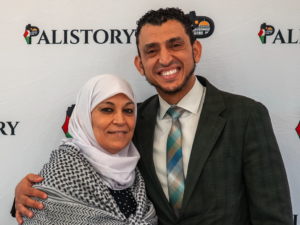
Organizer Shaniyat Turani moved between tents with the steady calm of someone who has been thinking ten steps ahead for months. “We’ve been organizing this for three, four months,” he said. “Last year we raised funds for families from Gaza who were displaced and are now here in New York. This year we’re continuing that initiative and expanding services.”
What mattered most to him wasn’t the turnout. It was what people felt. “As an organizer you’re constantly planning,” he said, “but as a participant you get a chance to see what people are really enjoying.” He pointed toward the pumpkin patch at the center of the market. “Especially when our communities have been going through so much, we deserve to have a little bit of joy.”
His words of wisdom showed how honesty, conviction, and joy can coexist. “Even though colonialist imperialist powers are saying there’s a ceasefire and peace plans, we know they’re just recalibrating the next phase of colonization,” he said. “We can’t wait right now, we’ve got to keep pushing.”
It was clear that this initiative took months of deliberation, planning, and intention. Shaniyat’s work ethic and integrity alike set the tone for the entire day, echoing fondly in my mind as I continued my conversations with patrons, organizers, and activists.
Farwa’s Flow: Planning & Pumpkin Patches
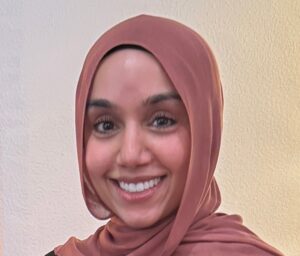
Where Shaniyat handled operations, Farwa Mahmood shaped the experience. A close friend of executive director Dania, she coordinated vendors, layout, and timing. “It feels so good when it comes together,” she said, eyes scanning the park. “When I see people actually enjoying the event, t’s a very fulfilling feeling.”
Her goal went beyond aesthetics. “This isn’t just about running,” she explained. “If they want to run, they can run anywhere. It’s more about the cause you’re running for and wanting to be with people who support the same cause.”
Her most intentional choice was layout. “I didn’t want the lines,” she laughed. “I liked the idea of a circle, you have all the options laid out, and you decide who you want to support.” The pumpkin patch in the middle wasn’t just decorative flair; it was unity. “It creates togetherness,” she said.
What moved her most were the small, family-owned tables. “You don’t usually get to see local vendors like this,” she said. “These are immigrants from Palestine who moved here and made a small business. Seeing that is very, very fulfilling.”
Before heading back into the bustling crowd, she added, “Please show support by donating whatever you can. And volunteer with us, giving time is more important than anything else.”
Sirat Streetwear: A Bridge Between Faith and Fashion
One of the busiest tables belonged to Sirat, a streetwear brand founded by Maarij and his brother. Sweaters and hoodies were lined up on clothing racks atop a stunning Persian rug.
“We started about a year and a half ago,” he said. “We saw other people with clothing brands and were like, let’s try.”
But Sirat wasn’t built to blend in. “One issue we saw within the Muslim community is that kids our age don’t really wear direct clothing sometimes,” he explained. “They’ll wear shorts above the knees or hoodies with celebrities. We were like, let’s solve that issue.”
He lifted a forest-green sweater with clean stitching. “It means ‘choose the right path even if few people walk it,’” he said. His favorite part? It’s wearable. “It’s not the clothing where you’re afraid to wear it to the bathroom,” he said. “You can wear it to a hangout or to your school MSA.”
When asked why they came, his answer was simple: “Miles for Migrants is an amazing cause, so like, let’s come out and support.” Then, grinning, “Just give us a follow @siratstreetwear. That’s really it.”
A Photographer’s Perspective
Behind the lens, Youssef captured what everyone else only passed by. “I know a lot of these people because we always do the same events all the time,” he said. “Some of them are my friends, some are new friends.”
What he enjoys most isn’t the shots, it’s the atmosphere. “I like to see everybody’s art, there are a lot of creators, and try different foods, and see people’s dogs,” he said. Dirty Soda caught his eye, too. “That’s a new one. I’m going to check them out before we leave.”
He pointed out booths most had overlooked: sweaters reading “in all delay, there is good” and custom tatreez jackets with embroidery on collars and cuffs. But his reflections circled back to purpose. “Having a resource where people can reach out for help is extremely important,” he said. “Especially for immigrants who are always very hesitant to reach out for help in this country.”
While words can carry movements and moments for a lifetime, his Instagram handle and visual portfolio say the rest: @thisphotographisproof.
Tiffany Cabán: Policy. Purpose. People.
Council Member Tiffany Cabán browsed quietly among throngs of shoppers. “I am the council member here,” she said, “and that work is rooted in equity and making sure people have freedom, dignity, access to healthcare, good economic opportunities, and safety above all else.”
Her commitment predates office. “I was a public defender before I became a city council member, so it’s a continuation of that work,” she explained. “I’m out here to support my MENA community, Palestinian folks, and people directly affected by colonization, genocide, and occupation.”
It’s personal for her. “I’m a Puerto Rican woman, we know a thing or two about being colonized,” she said. Supporting local vendors was intentional. “It’s about making it clear where we stand on human rights and against genocide, and telling people we’ve got your back and we love you.”
She had already made purchases. “I just spent a bunch of money at the handmade embroidery booth,” she laughed. As dabke music started nearby, she nodded toward the crowd. “There is nothing more powerful in terms of resistance than joy and defiance together.”
Her advice was grounded: “If you feel safe to do it, do it. Be in community. Get to know the people on your block. Let them know what you have to offer and what you need.”
How to Support the Asiyah Women’s Center
As the sun sank behind the bridge and the grass cooled beneath our shoes, families lingered near the pumpkin patch, unwilling to rush back into the unrelenting world. Whether you attended or wished you had, here are the most impactful ways to help:
- Donate. No amount is too small. Even $10 can cover transportation, groceries, formula, or urgent supplies.
- Volunteer your time and expertise. AWC especially needs translators, childcare support, drivers, tutors, and event volunteers.
- Support immigrant-owned businesses year-round.
- Follow AWC online for drives, packing events, and urgent needs.
- Show up. Presence is solidity, action, and resistance in motion.
Driving home across the Throgs Neck Bridge, tote bag filled with artisanal goodies, I kept thinking about something Farwa had said: “Giving time is more important than anything else.” Miles for Migrants proves that joy is not the opposite of resistance; it is one of its strongest tools.
Join us next year when the leaves turn brown and the weather turns cold. You’ll know where to find me: right by the pumpkin patch.